• Skip to main content
  • Skip to primary sidebar
  • Skip to footer

Tip of the Spear Ventures

A Family Office that behaves like Venture Capital | Private Equity | Business Consulting

  • Advisory Services
    • BRANDING & GTM
    • BUSINESS GROWTH
      • PE & VC Portfolio Growth
      • Executive Coaching for PE & VC
    • VENTURE FUNDING
      • Capital Raise & Network Access
    • M&A
  • FO Direct Investments
  • The Point Blog
  • Contact Us
  • FREE eBOOK

executive coaching

Why You Need Centered Executive Coaching More Than You Think!

July 4, 2014 By Sam Palazzolo, Managing Director

The Point: Centered Executive Coaching can help you become a better leader, a better leader of others, and a better leader of your business… Period!
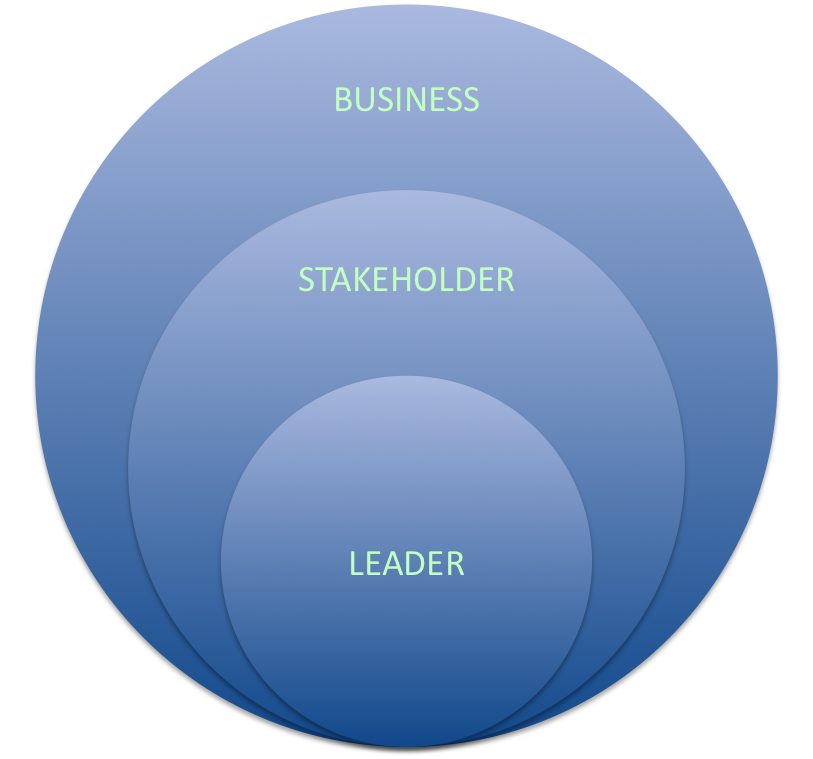
Centered Executive Coaching Services Overview

Many clients we introduce the Centered Executive Coaching model to as part of their leadership development would like to consider it as just another ordinary Executive Coaching program. On the contrary, Centered Executive Coaching is a subject that holds a gravity that cannot be compared. With it’s multi-focus offering, Centered Executive Coaching addresses three aspects of every business required in order to succeed:

  • Focus Area #1: The Leader (Leader Centered Coaching)
  • Focus Area #2: The Stakeholders (Stakeholder Centered Coaching)
  • Focus Area #3: The Business (Business Centered Coaching)

Centered Executive Coaching therefore exactly what should be done if you purely understand what it means to manage your time well, how to make timely and logical decisions, and to strike a balance between the personal and professional target in life and needless to say, meet your best productivity and job effectiveness among other reasons.

Centered Executive Coaching Equals Balance

Does Centered Executive Coaching help you balance your life? As an executive, your life majorly revolves around your office and other related duties at perhaps the expense of your family and personal life. This should not be the case. Having an executive coach helps one strike a balance between their personal and professional goals. This makes one forget about minor stresses that may be very injurious to their lives (or business).

Centered Executive Coaching Equals Better Decision Making

In the same vein, the aspect of decision-making is very significant. Both in the office and at home, the value of making quick decisions cannot be overrated. Centered Executive Coaching equips you with the important techniques to handle the hurdles at the workplace as they come. This is of great relevance especially if anyone wants to achieve success in life (both personally as well as professionally).

Centered Executive Coaching Equals Better Time Management

Time management can be thought of as a real disease. Any successful person in the context of holding an executive position cannot afford to not manage their time effectively. In the current life where change is the only constant thing, there seems to be a short time but with a lot in store to be done in a single day; quality time management is a must. This is a skill that never escapes you if you are being executive coached individually with by a coach who understands your tight schedule.

Centered Executive Coaching Equals Practicality

Centered Executive Coaching is very practical and its applicability in real life is something that has passed the test of time and events. Unlike being coached as an organization, your executive coach leads you through matters that affect you and you alone. This is attributed to the fact that nothing else has an agenda in the process except yours. This personal touch ensures you feel extremely esteemed and makes you implement what you have learned with the vigor and the urgency it deserves.

Centered Executive Coaching Equals Better Leadership

Logically speaking, not every being on this earth has a burning desire to lead. You are capable of managing, but perhaps not being a capable leader until you go through Centered Executive Coaching. This coaching exposes you to the most current challenges and their solutions one-to-one (1:1), plus how to go about solving future challenges when they arise. As a matter of fact, clients have said that Centered Executive Coaching helps keeps them competitive amongst their peers.

Spoiler alert- reading through this leadership development post is one thing- getting started is a completely different one. When will you get started? When will you reach the level of leading with influence? Also, if you need help with your communication skills training as a leader, please read a previous post on our Leadership Communication Skills Training.


Filed Under: Blog Tagged With: centered executive coaching, executive coaching, leadership development

The Best Communication Skills Training for Leaders: Key Qualities

July 3, 2014 By Sam Palazzolo, Managing Director

The Point: When considering the best leadership communication training programs, there are certain key qualities that you must consider in order to get your maximum return on investment (ROI).

The Best Communication Skills Training for Leaders- Key Qualities

Since the inception of communication skills training for leaders, one point has been repeatedly emphasized: You cannot be a leader if you don’t communicate well (And for good reason too!) After all, if you, as a leader, fail to get your message across to your audience, they won’t be compelled to follow you. I hear this all the time in executive coaching conversations. This is just one of the things that you need to learn to become a successful leader. Thankfully, you get to learn about this in communications training. If a leadership communication skills training program doesn’t include this point, it isn’t good enough. In fact, there are some other key qualities you need to check, including:

Range of Communication Styles

As a leader, you need to know about different communication styles. This way, you can use the most appropriate one in any given situation. This will make you a more effective communicator and therefore a better leader. Hence, it is a given that you should look for a communication skills training for leaders program that covers a range of communication styles. There is no point in learning one particular style. After all, no two persons are the same and you have to deal with a variety of situations as a leader. So, you have to be prepared for it.

Variety of Personality and Behavioral Techniques

Along with being able to communicate according to situation and location, you have to gauge the personality and behavior of the person/people you are communicating to. This becomes more important when you have to address a group of people. This is why it is crucial that the program you select helps you learn how to understand the different personality types of people you talk to in your capacity as a leader and how you have to communicate with them.

Suitable for Beginners

Some courses are advanced and require the participants to have some prior knowledge of communication skills. If you lack the requisite knowledge, the program is no good for you. So, you should opt for a program that is designed for beginners. While it is a given that you have the necessary charm and charisma a leader requires, but a lack of communication skills shouldn’t be a hindrance to your ability to learn them.

SUMMARY

These are the key qualities that make a communication skills training for leaders the best. Of course, you have to factor in price and location, but your final decision should be based on the three points covered above!

Filed Under: Blog Tagged With: communication skills training for leaders, executive coaching, leadership development

The Leadership Challenge: Conquering Alibis

September 16, 2013 By Sam Palazzolo, Managing Director

John was a C-suite leader that had been recommended to us by his board of directors for a coaching engagement (Centered Executive Coaching: Leader Centered Coaching program) and participate in The Leadership Challenge development program.  The company he belonged to was growing at a +25% annual growth rate, but John’s area of the company was coming in short (<10%).  While John had many of the same talented people in his department (The organization had a cross-functional organization chart, allowing them to share team members based on assignment), leadership was looking for improvement out of John.

In our first initial interview, where we determine alignment of the coaching initiative as well as outline future steps, John was shall we say a little “defensive” of his performance thus far for the year. In fact, John was downright full of excuses when it came to his performance.  It appeared as though it was everyone but John’s fault for the department’s lack of performance.

With this lack of performance in mind, and John’s lack to accept responsibility, we provided him with an exercise on alibis. Here is a list of the most commonly used alibis we presented to him. Our instructions were for him to read the list, and examine himself carefully for each item and determine how many of these alibis were his own property (ownership):

  • IF I didn’t have a wife and family…
  • IF I had enough “pull”…
  • IF I had money…
  • IF I had a good education…
  • IF I could get a job…
  • IF I had good health…
  • IF I only had time…
  • IF times were better…
  • IF other people understood me…
  • IF Conditions around me were only different…
  • IF I could live my life over again…
  • IF I did not fear what “they” would say…
  • IF I had been given a chance…
  • IF I now had a chance…
  • IF other people didn’t “have it in for me”…
  • IF nothing happens to stop me…
  • IF I were only younger…
  • IF I could only do what I want…
  • IF I had been born rich…
  • IF I could meet “the right people”…
  • IF I had the talent that some people have…
  • IF I dared assert myself…
  • IF I only had embraced past opportunities…
  • IF people didn’t get on my nerves…
  • IF I didn’t have to keep house and look after the children…
  • IF I could save some money…
  • IF the boss only appreciated me…
  • IF I only had somebody to help me…
  • IF my family understood me…
  • IF I lived in a big city…
  • IF I could just get started…
  • IF I were only free…
  • IF I had the personality of some people…
  • IF I were not so fat…
  • IF my talents were known…
  • IF I could just get a “break”…
  • IF I could only get out of debt…
  • IF I hadn’t failed…
  • IF I only knew how…
  • IF everybody didn’t oppose me…
  • IF I didn’t have so many worries…
  • IF I could marry the right person…
  • IF people weren’t so dumb…
  • IF my family were not so extravagant…
  • IF I were sure of myself…
  • IF luck were not against me…
  • IF I had not been born under the wrong star…
  • If it were not true that “what is to be will be”…
  • IF I did not have to work so hard…
  • IF I hadn’t lost my money…
  • IF I lived in a different neighborhood…
  • IF I didn’t have a “past”…
  • IF I only had a business of my own…
  • IF other people would only listen to me…
  • IF *** and this is the greatest of them all ***

If this list looks familiar to you, you may have seen a version of it in the classic “Think and Grow Rich” by Napoleon Hill.  The list is tucked away in the back of the book, in a section that is must reading for any leader titled “How to Outwit the Six Ghosts of Fear.”

John came away from the exercise realizing that while many of his alibis were professional in nature, those that were truly holding him back were his personal ones.  A modification therein allowed him to move closer to established goals.

What’s the Point? Analyze your weaknesses and overcome them, instead of building alibis to cover them.

Filed Under: Blog Tagged With: alibis, centered executive coaching, executive coach, executive coaching, leader, leader centered coaching, leadership, leadership challenge, napoleon hill, think and grow rich, weaknesses

Why You Need an Executive Coach

September 16, 2013 By Sam Palazzolo, Managing Director

Col. Jessep: You want answers?

Kaffee: I think I’m entitled to.

Col. Jessep: You want answers?

Kaffee: I want the truth!

Col. Jessep: You can’t handle the truth!

This scene from A Few Good Men staring the iconic Tom Cruise and Jack Nicholson represents why you need an executive coach to effectively run your business.  As a leader, we’ve seen time and again a search for answers.  A search that often times comes about when problems arise, or a change is needed.  Unfortunately, the truth is often times difficult to find.  It’s not that truth is elusive; it’s just that no one on your leadership team wants to tell you!

We recently conducted a poll of the executive coaches within our network on the topic of telling the truth. Roughly two-thirds of the coaches responding reported that their leadership engagements involved being a trusted advisor able to provide much needed objectivity to the C-Suite.

Trust is the primary reason that executives approach an executive coach.  Think of it as acting as a sounding board.  Leaders typically are under the false impression that there already exist sounding boards within the organization that they run and lead.  However, it’s this falsity that brings on strong negative reactions from leaders.

The common perception that friends and sounding boards exist can easily be debunked when you consider that as a leader, you have the power and authority to hire, reward, and fire.

May CEOs that we work with would agree with the statement; “It’s lonely at the top.”  While the view can be fantastic (think executive pay packages and perks), they also know that having the ability to open/close facilities, make difficult succession decisions, and deciding which business pursuits to attempt has tremendous impact on the lives of others.

With such territory, comes much stress… Enter the executive coach. The role of the executive coach is to enable the leader to make their best decisions, get their best results, and become the best leader possible (No short order).  In order to do so, the executive coach delivers the truth that the leader is missing;  The truth about what is happening currently.   The truth about what impact their future vision will have.  The truth about what the executive doesn’t want to hear, but must hear in order to move forward successfully.

You CAN handle the truth (You just don’t like it!)

As the leader of the organization, you must enable yourself to receive the truth.  That is not easy.  No leader likes to receive push-back, especially when we are working so hard to advance the organization in the right direction. But it is exactly this message, that of truth, that needs to be heard.

We worked with one leader that used to make all of the decisions himself all the time.  He had no sounding board to bounce ideas off of, nor would he accept one.  This worked well, until the economy turned and the water table surrounding him/his business lowered revealing the many tree stumps and boulders.  It would take careful navigation moving forward to not only keep his company afloat, but his role as the CEO.  He came to us with the goal of getting the proper direction, one that he knew could not be attained from his staff.  In the end, we provided the proper navigation and through his strategic execution moved the organization forward successfully with him at the helm.

Will you/your organization have such a happy ending?

What’s the Point: Leaders need objective/unbiased perspective in order to successfully lead.  Perspective provided by executive coaching leads to better decisions, better results, and better leadership.

Filed Under: Blog Tagged With: a few good men, better decisions, better leadership, better results, C-suite, CEO, executive coach, executive coaching, jack Nicholson, leader, leadership, perspective, sounding board, strategic execution, tom cruise, trusted advisory, you can handle the truth, you can’t handle the truth

The Inc 500 | 5000 Advisory Services Firm of Choice!

May 1, 2013 By Tip of the Spear

Leadership Advisory Board Image
Inc 500 | 5000 Leadership Advisory Boards

At Tip of the Spear, we are the Inc 500 | 5000 Advisory Services Firm of Choice! We partner with leaders from the Inc 500 | 5000 who are challenged by stagnant business plateaus, and/or achieving their full potential (i.e., They are achieving Point “A” results, however the higher potential at Point “B” should be achieved).

[countdown]

After researching the best of the best in executive, leadership and business development, we launched our innovative offerings in Executive Coaching, Leadership Development, and Communication Skills Training aimed specifically for the Inc 500 | 5000… and we haven’t looked back since!

Here’s what we discovered:

  • Leaders need one-to-one time with a proven expert from the C-Suite (Someone who has been there/done that… Executive Coaching at it’s finest.  NOT some career consultant that’s never held a C-Suite position)
  • Leadership today is different… Lean Startup methodology requires today’s entrepreneurial leader to have a build, measure, and learn (or pivot) mindset regardless of whether you’ve been in business 10-months or 10-years
  • Startup “mentality” just isn’t for breakfast anymore (or at the start of the initiative… You may need to “reinvent” your organization over, and over, and over again)
  • If two heads are “better” than one (Executive Coaching), then how would eight (8) more be? (Enter our Leadership Advisory Boards or LABs)

Regardless of why leaders come to us, we help them focus on what really matters:

RESULTS!

If you’re interested in achieving more, in less time, you should strategically partner with us.  Let our proven scientific methodology, that’s 100% guaranteed, show you how.  To immediately schedule a complementary consultation, email info@tipofthespearventures.com or complete the registration form below.

Oh… and our Inc 500 | 5000 clients haven’t looked back yet either!

100% Guaranteed Results

Filed Under: Blog, Featured Tagged With: business development, executive coaching, executive development, leadership advisory boards, leadership development, peer perspective

  • « Go to Previous Page
  • Page 1
  • Interim pages omitted …
  • Page 11
  • Page 12
  • Page 13

Primary Sidebar

Newsletter

Related Content

  • Most Sellers Negotiate Inside the Buyer’s Trap. Here Is How to Walk Out.
  • The Budget Freeze | Capital Has a Calendar. Use It.
  • The Leadership Gap AI Cannot Close
  • Scope Creep Is the Wrong Problem | The Real Margin Leak Happens Before the Work Starts
  • The Proof Stack | And the Math Had Better Math
  • The AI-First Operating Model: How AI Is Compressing the Path to Scale
  • The Procurement Aikido | When the Process Tries to Own the Deal

Search Form

Footer

From the Tip of the Spear

Operational intelligence for growth-stage executives. Every Tuesday at 6:15 AM ET. Subscribe today and receive the Price Pressure Playbook immediately.
DOWNLOAD NOW

Copyright © 2012–2026 · Tip of the Spear Ventures LLC · Members Only · Terms & Conditions · Privacy Policy · Log in